Looking for Solace
Into the Water
Treehouse Gallery
Groupshow october 2025
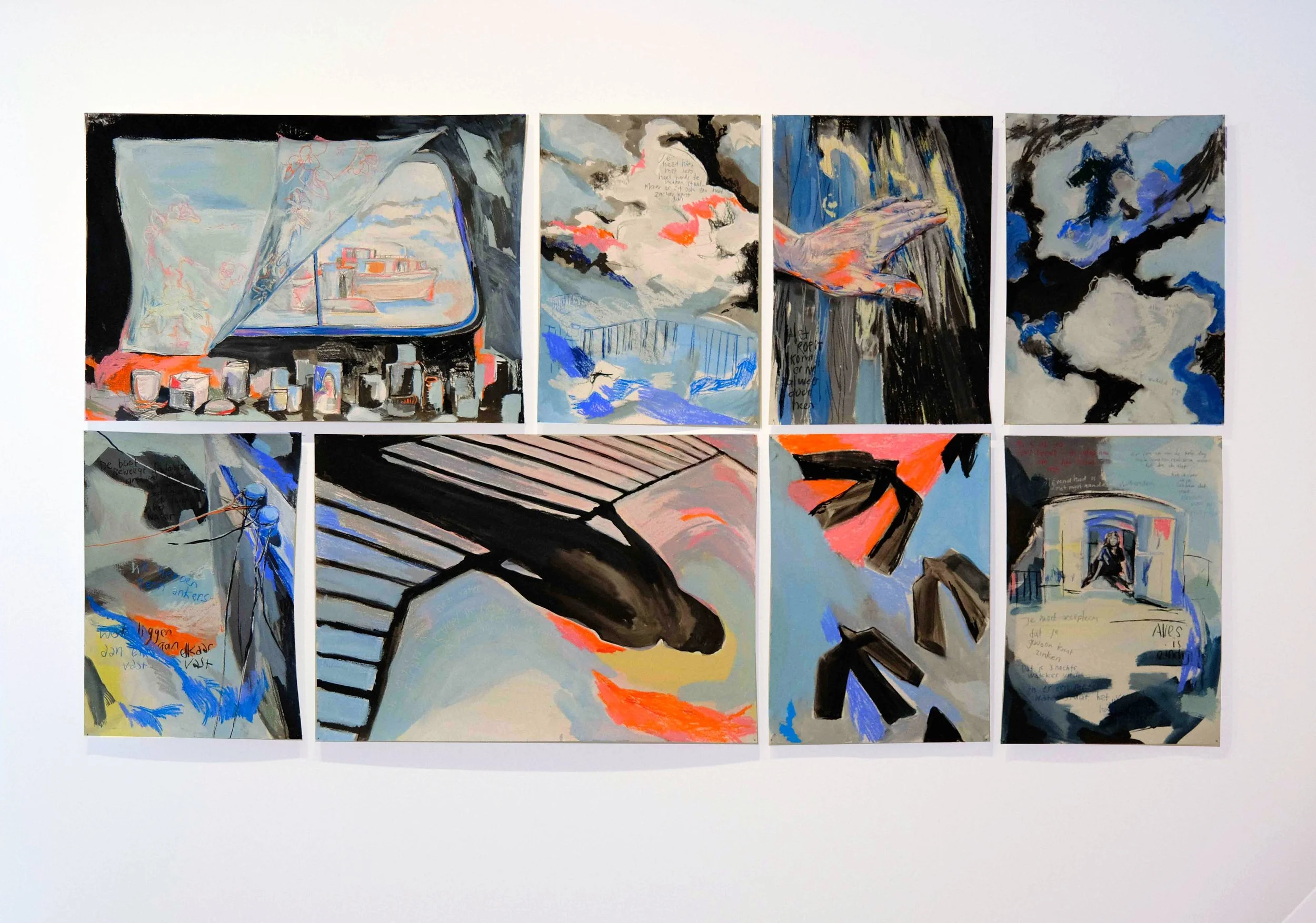
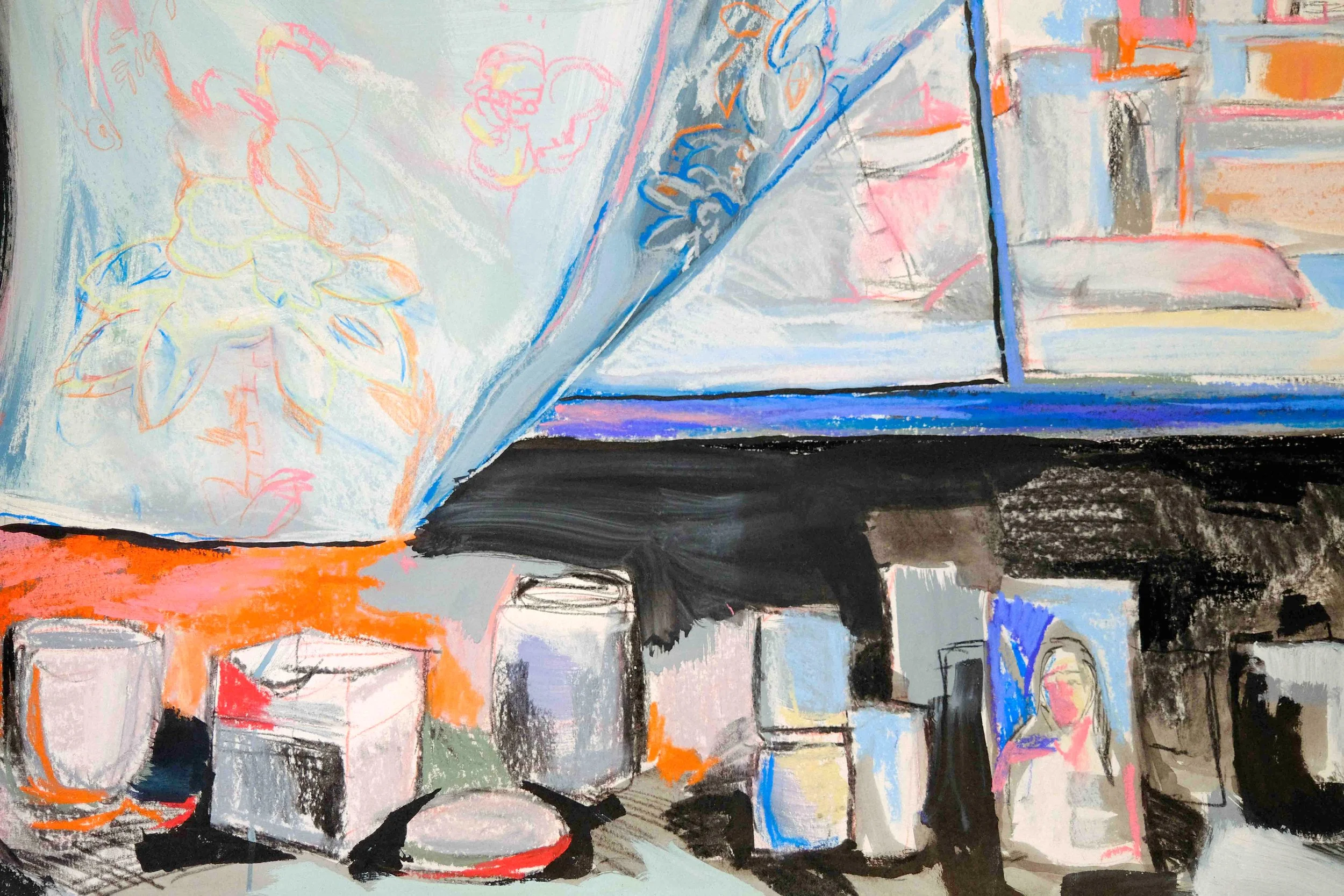
In Looking for Solace, artist-anthropologist Kyra Sacks explores the deep connection between people and water through the stories of residents in Amsterdam-Noord. In a series of dynamic drawings, she intertwines personal memories—of floods, life aboard boats, swimming lessons—with archival imagery and the surrounding landscape. Water emerges as both a source of fear and resilience, loss and joy, set against a backdrop of constant change.
Irene
Om op de boot van Irene te komen loop je via het dek van haar buren. Anti-slip matten zorgen ervoor dat je niet over de rand uitglijdt. Irene wacht me op met koekjes en thee. We zitten in de stuurhut, waar ze met me deelt hoe haar blik op de wereld is gevormd door haar leven op een alsmaar bewegend schip. Het eeuwige deinen. Ze verbeeldt het zich niet: zij beweegt altijd.
’s Morgens steekt ze haar hand uit het raam: “Waait het? kan ik vandaag die schilderklus oppakken? Moet ik op mijn knieën? Het roest komt er nu alweer doorheen…”, constateert ze. Haar handen zijn ruw en zacht tegelijk. Net als het schip, vol tegenstellingen. “Het harde staal”, wijst ze, “daar moet je niet op vallen. Maar er zitten ook zachte kanten aan. Als ik het niet voortdurend in de gaten hou, dan is het straks weg. Blijvendheid is met mijn aandacht verbonden. Als die verdwijnt… ik zou ervoor kunnen kiezen dat mijn eigen gedrag leidt tot de vergankelijkheid van deze boot.”
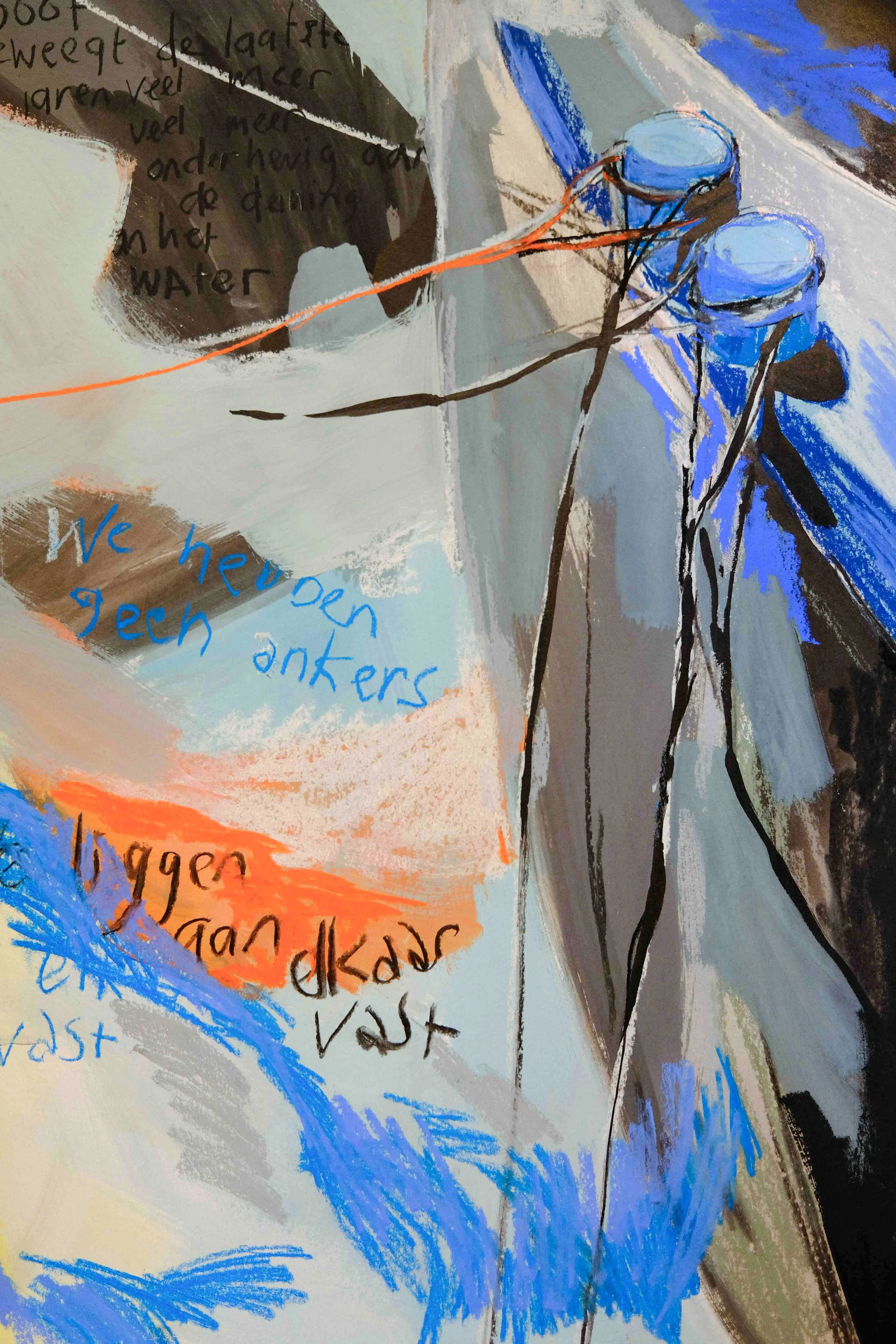
Ze is niet bang voor grote veranderingen, want alles verandert hier toch altijd al. Ze vindt steun in de mensen op de boten om haar heen. “We hebben geen ankers, we liggen aan elkaar vast.” Hoewel de gemeenschap wel aan het veranderen is. “Mensen doen dingen niet meer zelf, ze huren overal iemand voor in.”
Ook het schip beweegt de laatste jaren meer, lijkt meer onderhevig te zijn aan de deining van het water. “Je moet accepteren dat je gewoon kunt zinken. Dat je ’s nachts wakker wordt en er een meter water staat. Of dat het vanuit allerlei hoeken en gaten gaat lekken.”
Ze kijkt naar hoe het licht door de wolken priemt, het water doet oplichten. Haar schaduw valt scherp op het dek. “Soms, heel soms, is alles ineens grijs. De hele werel, grijs, kun je je dat voorstellen?”
Irene
To get to Irene's boat, you walk across her neighbors' deck. Mats have been laid out to ensure that you don't slip over the edge. Irene is waiting for me with cookies and tea. We sit in the wheelhouse, where she shares with me how her view of the world has been shaped by her life on a constantly moving ship, the eternal rocking. She's not imagining it: she's always moving.
In the morning, she sticks her hand out of the window to see: “Is it windy? Can I do that painting job today? Will I have to get down on my knees? The rust is already showing through again...”, she observes. Her hands are rough and soft at the same time. Just like the ship, full of contradictions. “The hard steel,” she points out, “you shouldn't fall on that. But there are also soft sides to it. Imagine, if I don't keep a constant eye on it, it will soon be gone. Permanence is linked to my attention. If that disappears... I could choose to let my own behavior lead to the transience of this boat.”
She is not afraid of big changes, because everything here is always changing anyway. She finds support in the people on the boats around her. “We don't have anchors, we are tied to each other.” Although the community is changing. “People don't do things themselves anymore, they hire someone for everything.”
The ship has been moving more in recent years, seemingly more susceptible to the swell of the water. “You have to accept that you could just sink. That you could wake up at night and find a meter of water in the cabin. Or that it could start leaking from all sorts of nooks and crannies.”
She watches how the light pierces through the clouds, illuminating the water. Her shadow falls sharply on the deck. “Sometimes, very occasionally, I wake up and everything is gray. The whole world, gray. Can you imagine that?”
Yordanos
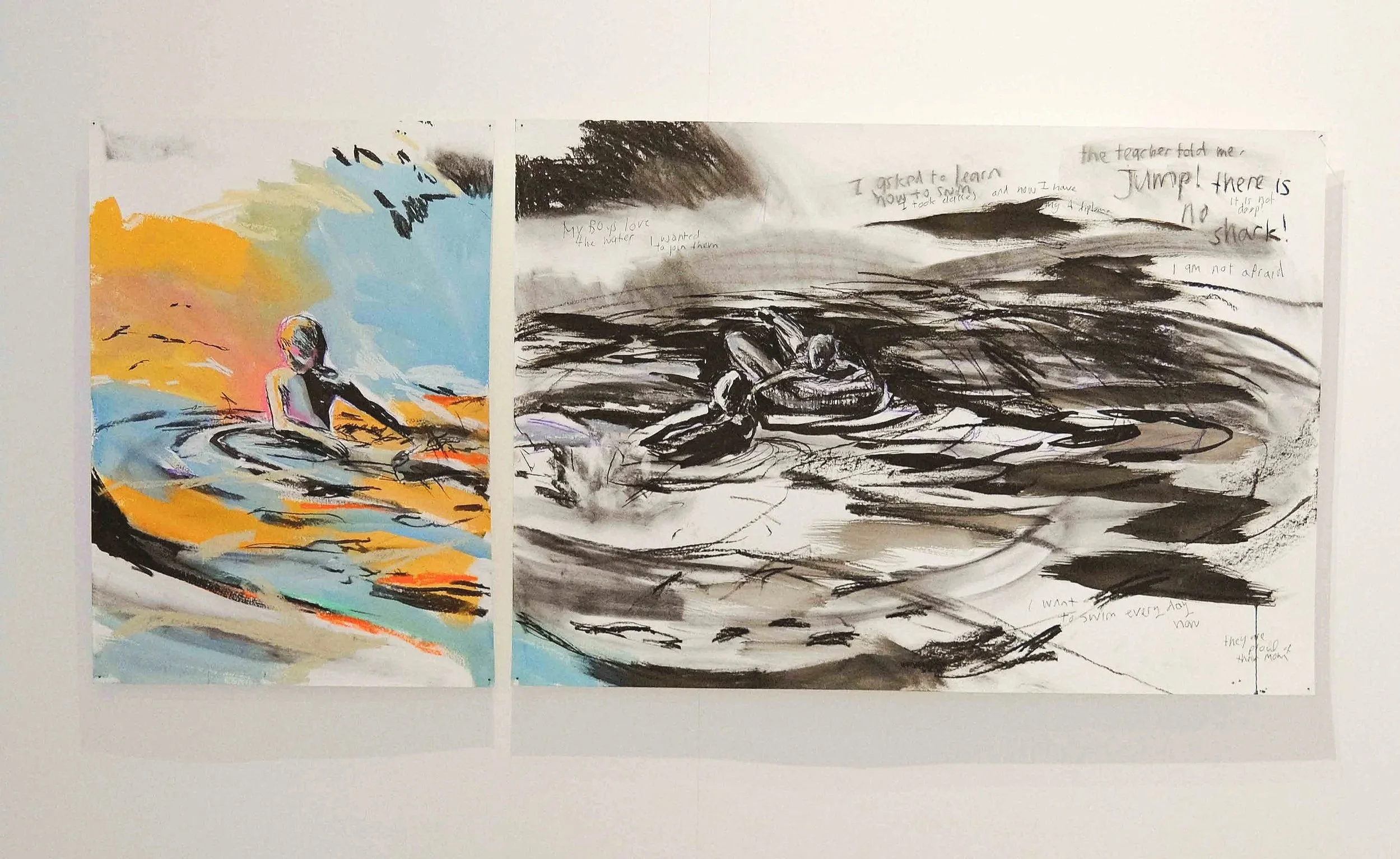
Yordanos wacht op me bij in de OBA van Molenwijk. Ze is in Ethiopië geboren en woont sinds vijf jaar in Amsterdam-Noord woont. Haar twee zoons van 9 en 11 zijn dol op zwemmen. In de zomers willen ze het liefst de hele dag in het water liggen. “I didn’t know about this. In Ehtiopia we drink water, we do not swim in it.”
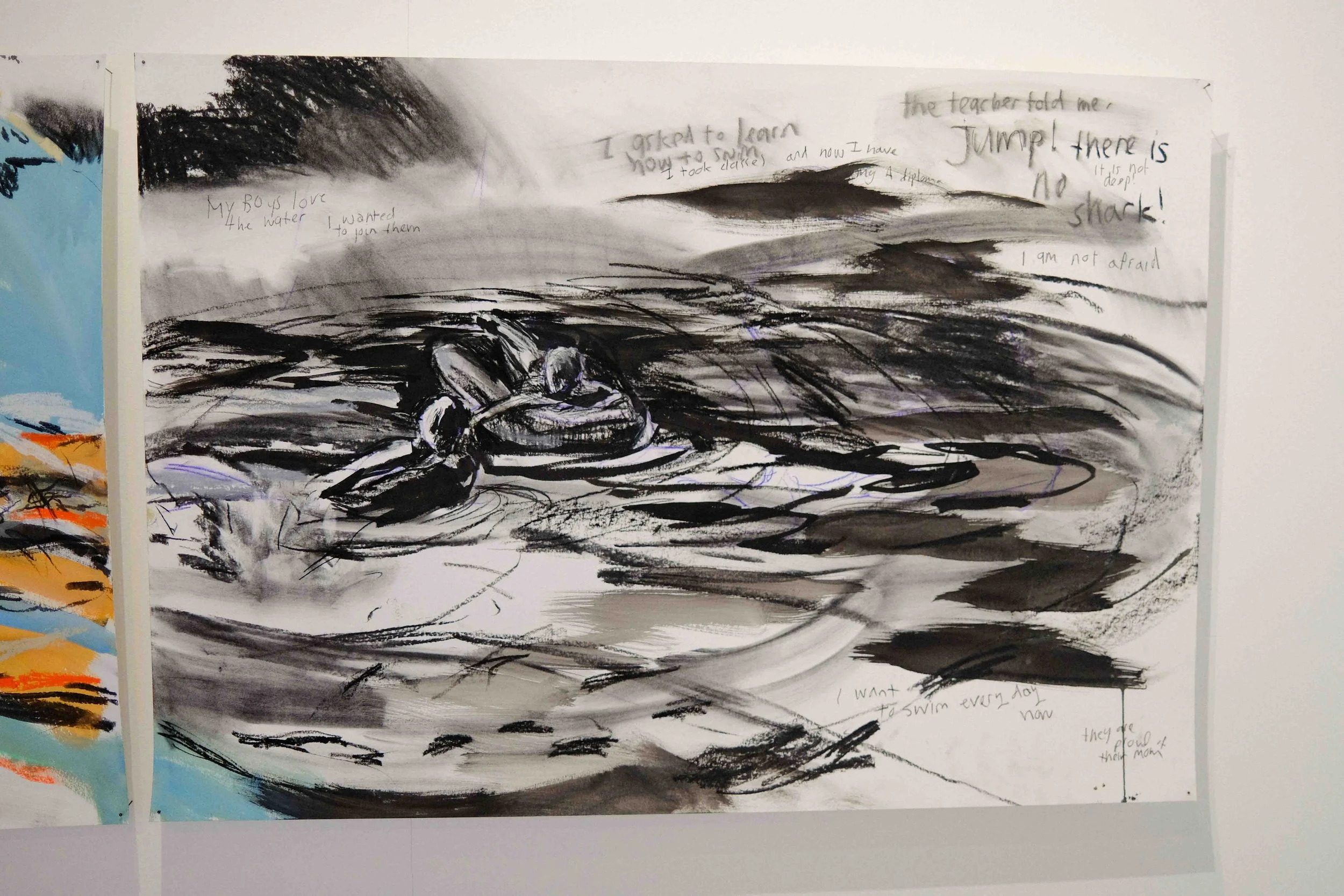
Het enthousiasme van haar jongens was aanstekelijk. Toen ze het fietsen onder de knie had informeerde ze naar zwemlessen. Het kon, maar dan moest ze nog meer vrouwen vinden die dat leuk vonden. En zo begon het. Ze was niet bang. Hoewel, misschien een beetje. Maar ze had het snel onder de knie. “Frieda, de docent, riep: ‘Don’t be afraid! It is not deep! There is no shark! Just jump!’”
Voordat ze kon zwemmen, zat ze eens op de rand van het zwembad met haar voeten in het water, en zag een klein kind van een jaar of vier dat in de problemen zat. Ze kon er niet inspringen maar stak haar been naar de jongen uit, die zich er snel aan vastklampte. “I want to help everyone. That is humanity, it doesn’t matter who you are.” Nu ze haar A diploma heeft wil ze het liefst elk weekend zwemmen. “But my boys tell me, ‘Mom, sometimes we want to play football or do something else, too!’” Ze voelt zich veilig hier, omringt door water.
Yordanos
Yordanos is waiting for me at the OBA library in Molenwijk. She was born in Ethiopia and has been living in Amsterdam-Noord for five years. Her two sons, aged 9 and 11, love swimming. In the summer, they spend the entire day in the water. She laughs: “I didn’t know about this. In Ethiopia we drink water, we don’t swim in it!”
Her boys' enthusiasm was contagious. Once she had mastered cycling, she inquired about swimming lessons. It was possible if she could find more women who were interested. And so it began. She wasn't afraid. Well, maybe a little. But she quickly got the hang of it. "The teacher would say: 'Don't be afraid! It's not deep! There are no sharks! Just jump!’ And I did.”
Before she could swim, she was sitting on the edge of the pool with her feet in the water when she saw a small child, about four years old, who was in trouble. She couldn't jump in, but she stretched out her leg to the boy, who quickly grabbed hold of it. "I want to help everyone. That is humanity, it doesn't matter who you are.“ Now that she has her A diploma, she wants to swim every weekend. “But my boys tell me, ‘Mom, sometimes we want to play football or do something else, too!’" She feels safe here, surrounded by water.
Martin
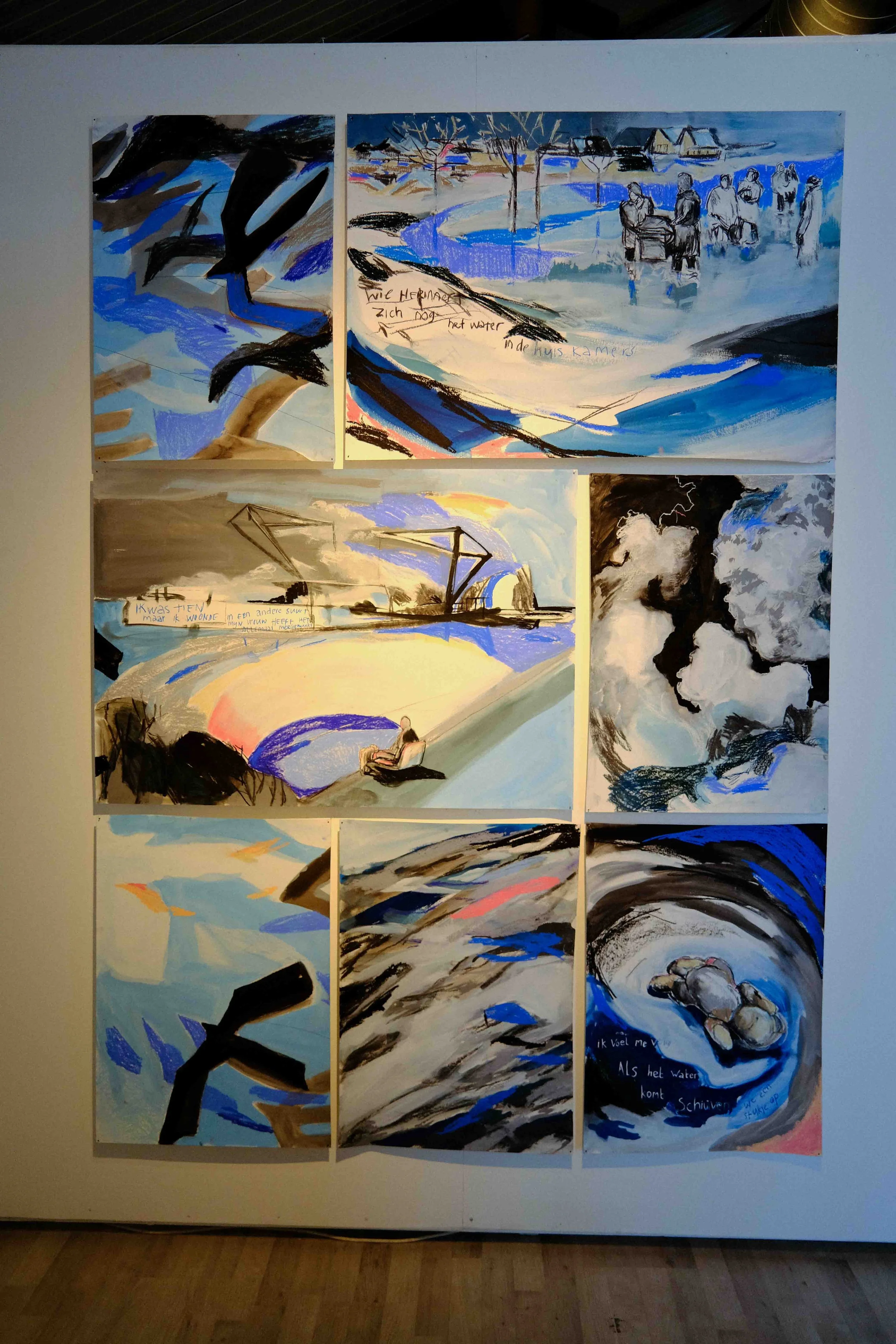
Na de grote watersnoodramp van 1953, stond in 1960 het water in Amsterdam Noord weer in de huiskamers. En Tuindorp Oostzaan compleet onder water te staan nadat een dijk doorbrak. In de beeldbank van het stadsarchief vind ik foto’s van zandzakken en mensen die door het water heen waden, op zoek naar veiligheid. Van een teddybeer in een plas water.
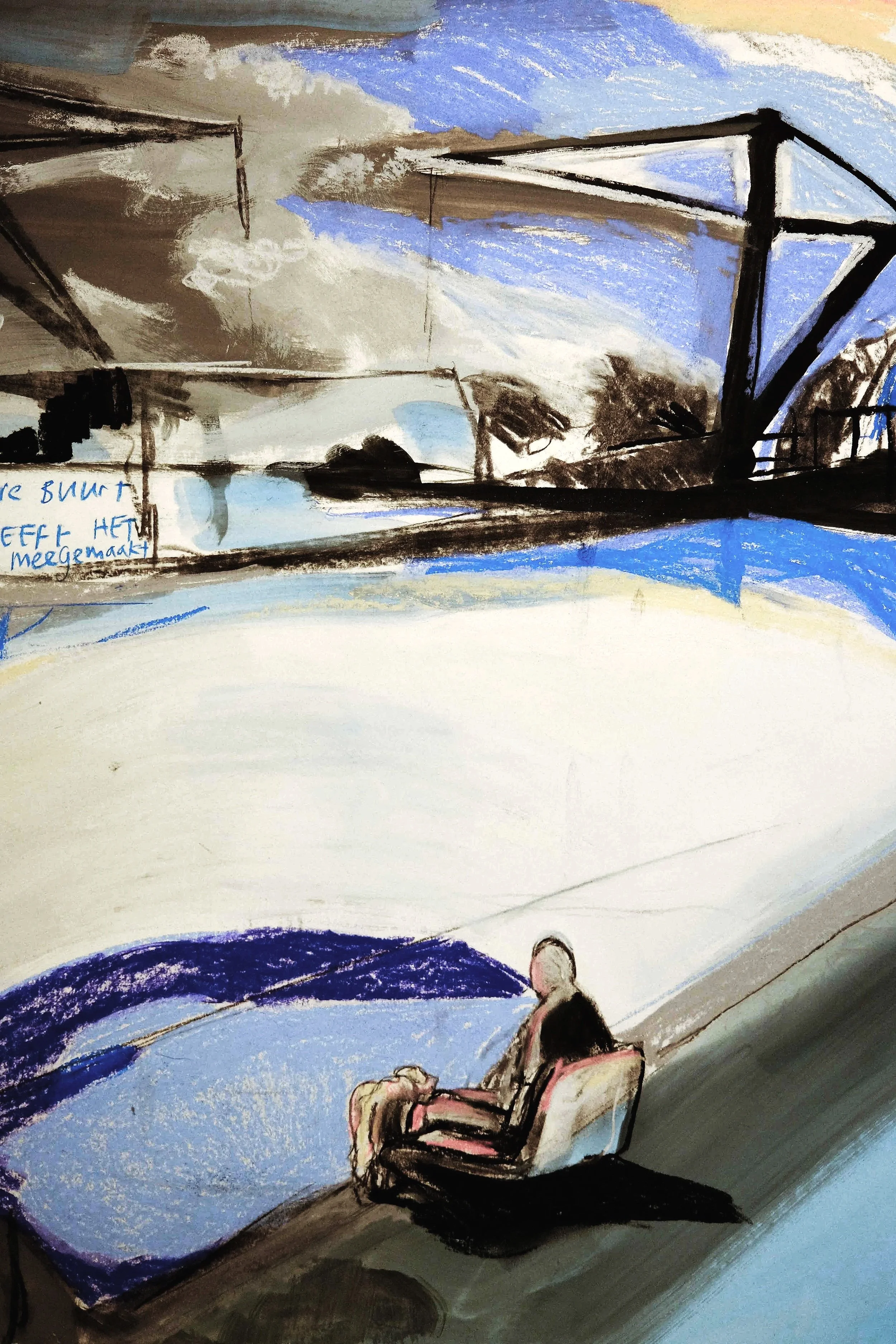
Het stormt een beetje als ik vanaf de NDSM werf richting het Keerkringpark loop. Het is verlaten, maar helemaal aan de kop zie ik een figuur op een bankje zitten. Vlak langs de waterrand, met een hond. Daarachter het glinsterende IJ en de kranen in de Coenhaven, die zich scherp aftekenen tegen de witte wolken. Ik teken de man en hij blijkt Martin te heten, een echte Noorderling: “Ik was tien toen het hier overstroomde. Maar ik kwam uit een andere buurt. Mijn vrouw woonde wel hier, in Tuindorp, die heeft het allemaal meegemaakt. We hebben er nog foto’s van.”
Hij aait zijn hond, of eigenlijk, de hond van zijn dochter waar hij op past nu ze op vakantie is. Het is geen waterrat. Hij zegt zich geen zorgen te maken dat zo iets weer kan gebeuren. De dijken zijn nu sterker. “Ik voel me veilig. En als het wel komt dan schuiven we een stukje op.”
Martin
After the great flood disaster of 1953, in 1960 the water in Amsterdam North was back in people's living rooms. Tuindorp Oostzaan was completely flooded after a dike broke. In the images of the city archives, I find photos of sandbags and people wading through the water, looking for safety. Of a teddy bear in a puddle of water.
It's a bit stormy as I walk from NDSM towards Keerkringpark. It's deserted, but at the far end I see a figure sitting on a bench. Right by the water's edge, with a dog. Behind it, the glistening IJ and the cranes in Coenhaven, silhouetted against white clouds. I sketch the man and he turns around to speek to me. Martin is a true ‘Noorderling’: “I was ten when it flooded here. But I came from a different neighborhood. My wife lived here, in Tuindorp, and she experienced it all. We still have photos of it.”
He pets his dog, or rather, his daughter's dog, which he is looking after while she is on vacation. It is not a water lover. He says he is not worried that a flood like that could happen again. The dikes are stronger now. “I feel safe. And if it does happen, we'll just have to move over a bit.”